How is Reformer Pilates Different?
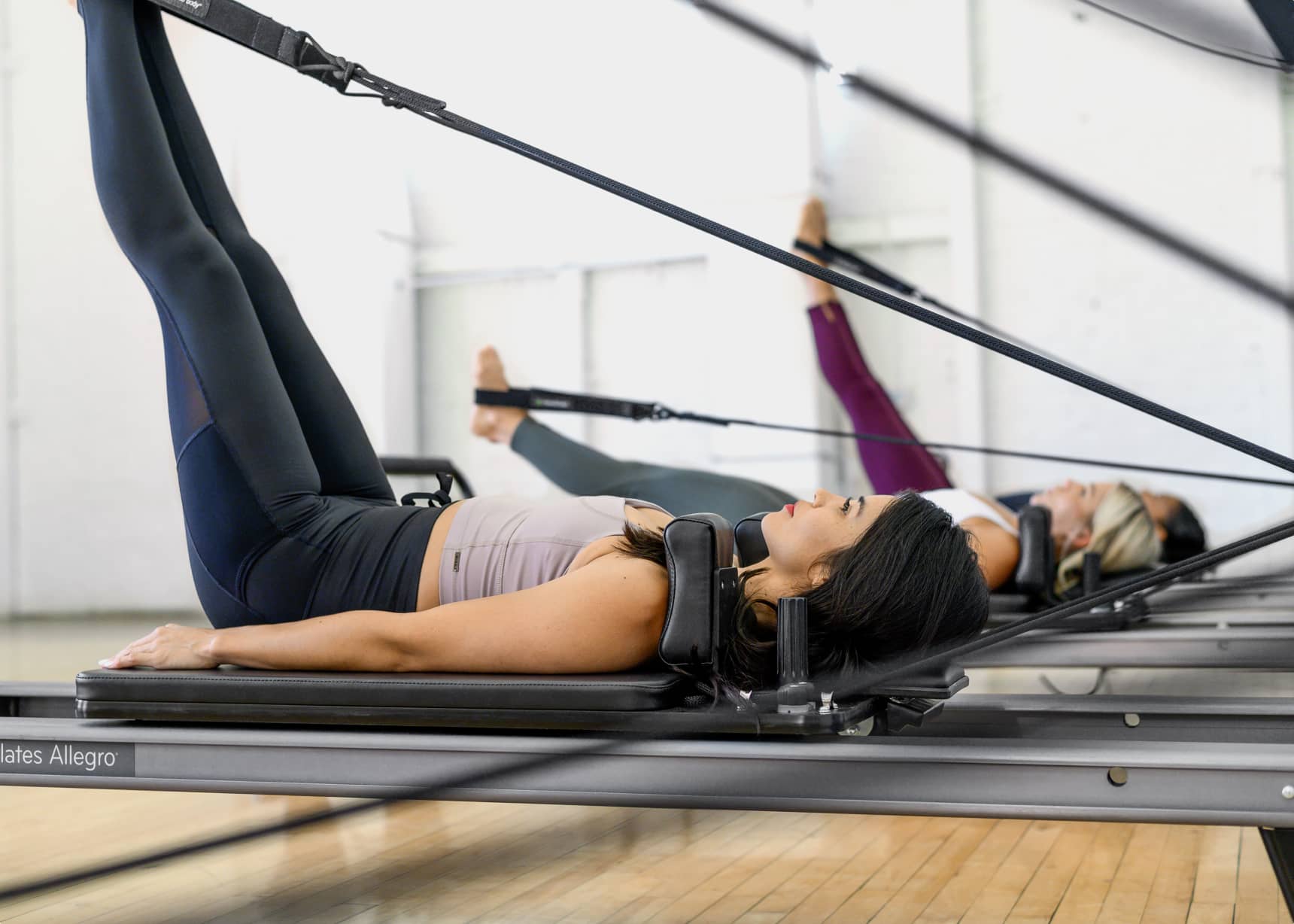
Mat Pilates focuses on core strength and flexibility using body weight and additional props for resistance. Reformer Pilates introduces adjustable resistance through the springs on the Reformer, along with the sliding carriage to aid motion. This method offers a broader range of exercises targeting specific muscle groups more effectively.
Since resistance can be tailored to challenge you as you progress, it makes it a suitable alternative for all fitness levels. The Reformer’s structure supports the body in alignment and helps execute movements more accurately, providing immediate feedback on your form. In other words, the Reformer informs the user where they need to pay attention, shift their position, change the springs, or modify the exercise. Rather than working against a fixed weight, Reformer springs provide variable resistance and continuous neuromuscular feedback throughout an entire exercise, creating a dynamic environment where the equipment can either challenge your stability or act as a supportive partner.
Benefits of Reformer Pilates
Thanks to its incredible versatility and the ability to customize workouts for any skill level, the Pilates Reformer offers a comprehensive array of physical and mental benefits:
1. Enhanced Core Strength and Stability
The Reformer’s adjustable spring resistance continuously challenges your core musculature, including the deep abdominal and stabilizing muscles of the trunk. This targeted engagement promotes better posture, balances the pelvic girdle, and supports optimal spinal alignment during both daily activities and athletic movement.
2. Improved Flexibility and Range of Motion
Regular sessions encourage long, elongated, and highly controlled movements. By strengthening muscles while they are in an extended position, the machine’s design helps safely increase structural flexibility and expands functional joint range of motion.
3. Full-Body Workout
Reformer Pilates provides a comprehensive, balanced workout that targets every major muscle group in a single session. Integrated exercises like Supine Arm Work are designed to seamlessly challenge the upper body and shoulder girdle while simultaneously conditioning the legs, hips, and deep abdominal stabilizing systems.
4. Low Impact but High Efficiency
The horizontal alignment of the Reformer unloads gravity from the spine, making it an ideal choice for those seeking a highly effective workout that is gentle on the joints. This low-impact efficiency is particularly beneficial for injury rehabilitation, pre- and postnatal fitness, balance training for active agers and seniors, and for athletes who want to optimize their performance without putting unnecessary strain on their body.
5. Personalized Workout Experience
With the ability to precisely adjust spring tensions, the Pilates Reformer allows you to fully customize your movement patterns to match your unique fitness level and personal goals. Additional professional accessories—such as the sitting box and padded jumpboard—allow you to transform your practice into a deeply personal journey toward better health, while small props like the TOGU Ball and Ultra Fit Circle offer unique stability challenges and tailored exercise modifications.
Choosing a Studio Partner: The Balanced Body Distinction
When exploring a Reformer Pilates practice, the quality of the equipment and the depth of the instructor’s education are your two most important considerations.
Major fitness franchises, elite boutique studios, and world-class rehabilitation clinics around the globe choose Balanced Body as their exclusive equipment partner. With more than 50 years of industry leadership, Balanced Body combines state-of-the-art engineering with handcrafted durability. A high-quality, professional Reformer ensures smooth carriage glides, quiet spring transitions, and reliable structural safety—allowing you to focus entirely on your movement exploration without distraction.
Furthermore, elite studios look for instructors who have completed a Comprehensive Pilates Education. Unlike quick weekend certifications, a true comprehensive program requires hundreds of hours of rigorous study, anatomy training, and supervised practice across the entire Pilates apparatus ecosystem (including the Mat, Reformer, Trapeze Table, Chair, and Barrels). This depth of training ensures that your instructor has the movement literacy required to customize exercises to your unique structural needs.
The Beginner’s Blueprint: Your First Reformer Workout
If you are looking for a foundational reformer workout for beginners, the ideal entry point focuses on exploring fundamental movement skills and building whole-body coordination. The following 10-exercise sequence represents a balanced, classical progression designed to safely introduce your body to the mechanics of the machine:
1. Pelvic Clock: Foundational Lumbo-Pelvic Awareness.
Lying on the carriage, you perform subtle, isolated tilts of the pelvis. This exercise allows you to map your lower-back alignment, explore pelvic symmetry, and connect with your deep centering muscles before moving the carriage.
2. Footwork: Lower Limb Alignment & Tracking.
With your feet positioned on the footbar, you smoothly press the carriage away and return it. This warms up the hips, knees, and ankles while reinforcing clean structural tracking through the lower body.
3. Supine Arms: Trunk Integration & Shoulder Stability.
Lying on your back and holding the loops in your hands, you move the straps in controlled arcs. This teaches the upper body and shoulder girdle to integrate seamlessly with the deep stabilizing muscles of your torso.
4. The Hundred Prep: Breath & Upper Abdominal Coordination.
A progressive variation that coordinates rhythmic arm movement with a gentle, supported chest lift. It introduces the breath work and endurance required for advanced variations while building initial neck and abdominal stamina.
5. Kneeling Abdominals Facing Back: Closed-Chain Trunk Stability.
Kneeling on the carriage with your hands on the wooden frame or shoulder rests, you pull the carriage toward you using the strength of your trunk. This builds deep stability against a moving platform.
6. Roll Downs: Spinal Articulation & Ease.
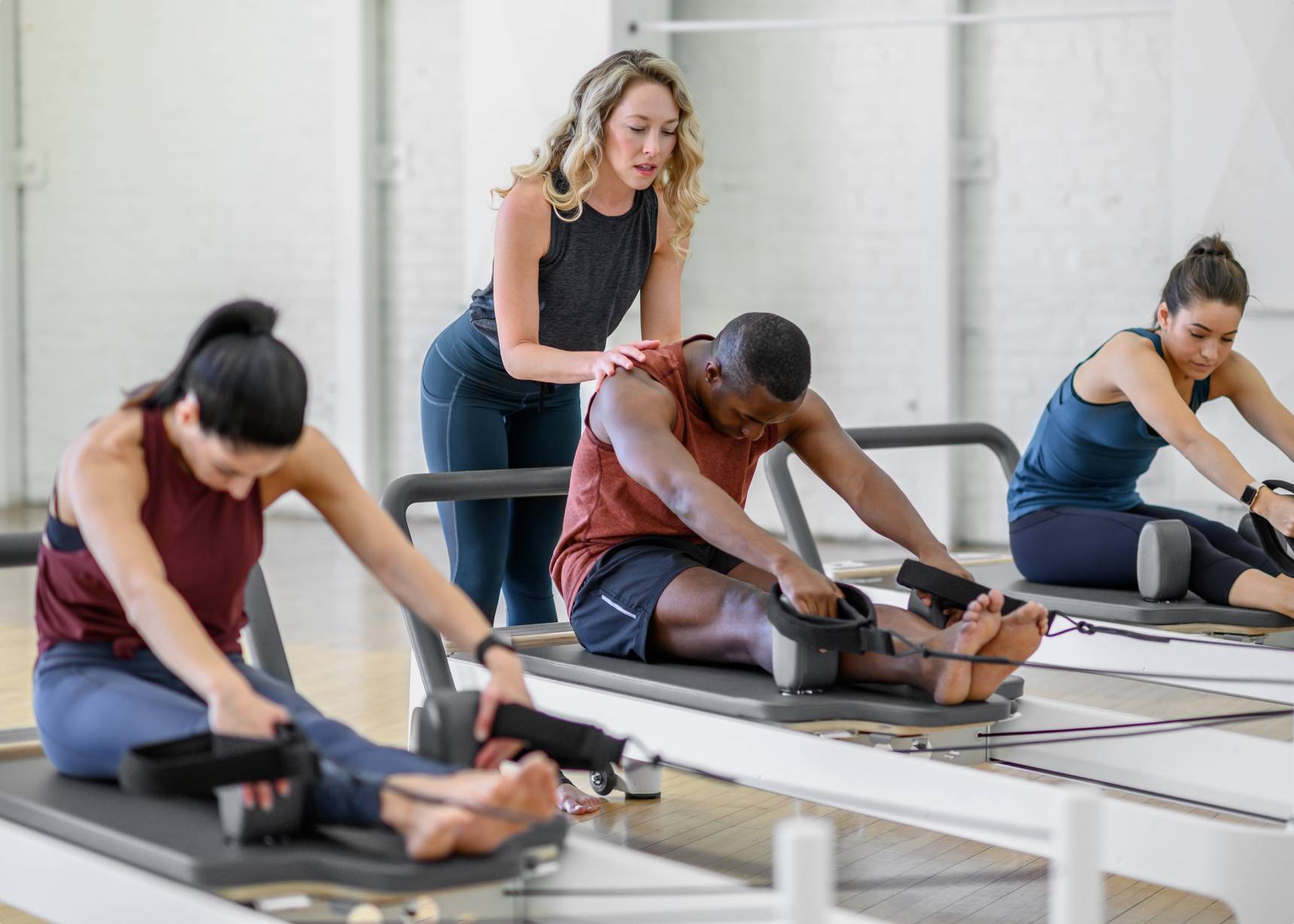
Sitting on the carriage and holding the straps, you smoothly articulate the spine down and back up. This exercise introduces sequential spinal movement and promotes flexibility through the entire back.
7. Seated Arm Work Facing Back on the Long Box: Postural Restoration & Back Strength.
Sitting on a padded box placed over the carriage, you pull the straps to engage the upper back, rear shoulders, and thoracic extensors. This is excellent for counteracting the forward-slumping posture of modern desk work.
8. Overhead Press / Swan on the Long Box: Thoracic Extension & Upper Body Control.
Lying face down on the long box, you use your arms against the footbar to press your upper body into a beautiful, controlled extension. It safely opens up the chest while integrating the whole back side of the body.
9. Elephant: Hamstring Flexibility & Pelvic Control.
Standing on the carriage with your hands on the footbar, you use your hips and core to press the carriage out and pull it back in. This provides a deep, dynamic stretch for the calves and hamstrings while reinforcing pelvic control.
10. Seated Side Stretch / Mermaid: Lateral Spinal Mobility.
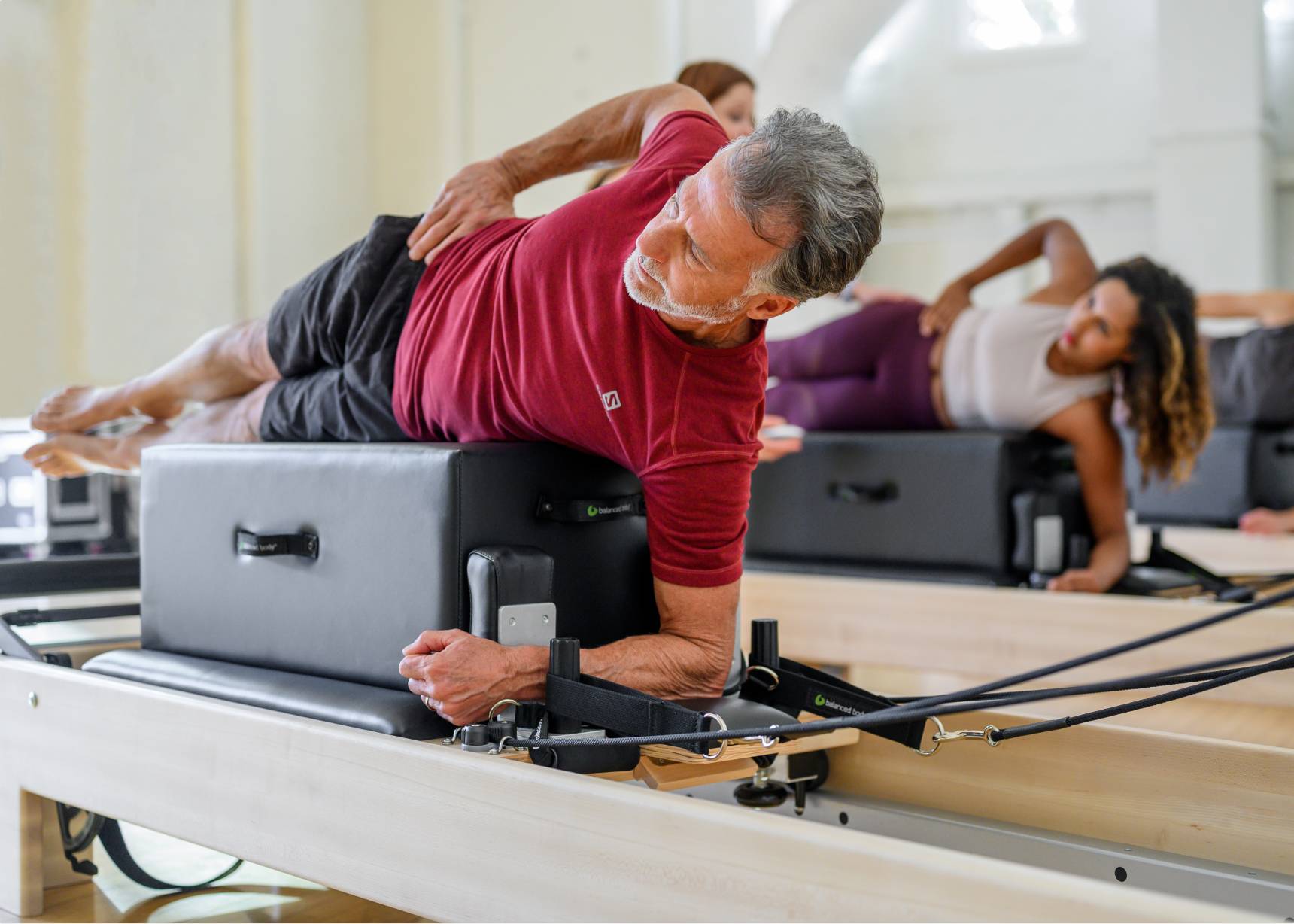
Sitting cross-legged or in a Z-sit on the carriage, you press the footbar away to open up the entire side of your body. This creates lateral space in the ribs and restores multi-directional mobility to the spine.
What to Expect in Your First Class
For those new to the Pilates Reformer, we recommend starting with an introductory class or private session. A certified Pilates instructor will ensure you use the equipment safely and effectively. At your first Reformer Pilates session, the instructor will introduce you to the Reformer and its parts including the footbar, springs, carriage, and loops. You’ll learn how to position yourself on the machine and properly engage your muscles. Expect a mix of familiar exercises and new movements that are unique to the Reformer.
Understanding a few fundamental concepts can help you feel completely confident before you arrive:
Prioritizing Apparatus Safety
Reformer safety is fundamentally about understanding how your body interacts with the machine’s setup. A qualified instructor will guide you on how to safely mount and dismount the moving carriage without losing your balance. Before starting any exercise, your instructor will ensure that your footbar is securely locked, the headrest is at the appropriate height for your neck, and the specific spring configuration is attached correctly to support the movement pattern.
Studio Attire and Expectations
When selecting your workout attire, prioritize comfortable clothing that allows for unrestricted movement and full range of motion.
- Avoid Hardware: Always choose clothing without exposed zippers, metal rivets, or plastic buttons, as these can easily tear or puncture the delicate vinyl upholstery of the Pilates equipment.
- The Truth About Grip Socks: Many boutique studios have a mandatory grip-sock policy for hygiene and sanitation reasons, making them a common studio expectation. However, they are not a universal requirement for Pilates safety. Depending on the fit of the sock and the specific exercise, socks can sometimes shift against your foot. Feel free to ask your studio about their specific hygiene guidelines before your first visit.
Embracing the Coordination Shift
It is completely normal to feel a bit uncoordinated during your first few sessions. Learning to time your breath with the glide of a spring-loaded carriage takes practice. Within a few classes, you will experience a distinct comfort milestone where coordinating your body’s movements with the machine’s mechanical feedback begins to feel entirely natural and intuitive.
Can beginners do Reformer Pilates?
Absolutely! The Pilates Reformer is suitable for individuals of all fitness levels, including beginners. The moving carriage provides support and also challenges balance and the springs offer resistance that help to support and challenge when necessary for movers of all skill levels. It’s recommended to start with beginner classes or private sessions to learn the basics and proper techniques under the guidance of a certified Pilates instructor.
How often should you do Reformer Pilates to see results?
For optimal results, practicing Reformer Pilates 2-3 times per week is recommended. Consistency is key, as with any fitness regimen, and incorporating the Pilates reformer into your routine can lead to noticeable improvements in strength, flexibility, and overall well-being. Sessions of 30-60 mins on a regular basis will garner noticeable results in a relatively short time.
What should I wear to do Reformer Pilates?
Wear comfortable, form-fitting clothing that allows for a full range of motion without being loose enough to get caught in the Reformer’s parts. It’s also common to practice Reformer Pilates barefoot or in socks with grips on the bottom for stability and grip on the Reformer.
Can you do Reformer Pilates at home?
Yes, you can do Reformer Pilates at home if you have the space and budget to invest in the equipment. A home machine is the perfect solution when outside classes don’t fit your schedule or budget, even if you’re already a member of LifeTime, LA Fitness, or the local YMCA. Look for a Reformer that is easy to set up and store away, like Balanced Body’s Metro IQ® Reformer.
It’s beneficial to receive instruction from a certified Pilates instructor first to ensure proper form and technique; then, you can get all the benefits of Pilates Reformer workouts without leaving your home.
